

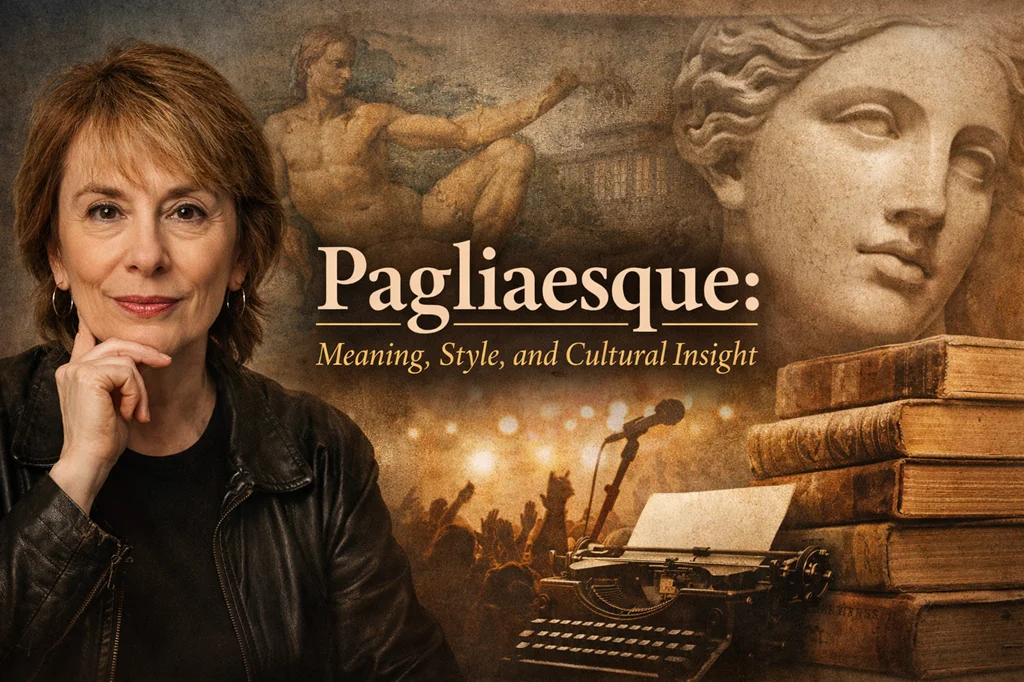
Pagliaesque Language has a fascinating way of evolving to capture ideas that feel larger than simple definitions. Certain words emerge not from dictionaries but from influence, personality, and intellectual legacy. One such term is “pagliaesque.” It is not just a descriptor. It is a way of thinking, writing, and engaging with culture that reflects intensity, independence, and fearless critique.
This article explores what “pagliaesque” means, where it comes from, how it is used today, and why it continues to shape conversations in culture, academia, and media.
What Does Pagliaesque Mean?
The term “pagliaesque” is derived from the name of Camille Paglia, a cultural critic known for her sharp analysis and unconventional viewpoints. When something is described as pagliaesque, it typically carries certain qualities:
- Bold and unapologetic expression
- Deep engagement with art, history, and culture
- A willingness to challenge mainstream ideas
- A blend of intellectual rigor and dramatic flair
In simple terms, pagliaesque writing or thinking stands out. It is not neutral or overly cautious. It is vivid, confident, and often provocative in a thoughtful way.
The Origins of the Pagliaesque Style
To understand the term, it helps to look at its roots. Camille Paglia built a reputation for her unique approach to cultural criticism. Her work often combines references from classical art, literature, and modern pop culture, creating a bridge between the past and the present.
What makes her style distinctive is not just the content but the tone. It is assertive, expressive, and deeply analytical at the same time. Over time, readers and critics began using “pagliaesque” to describe writing that carries a similar spirit.
Key Characteristics of Pagliaesque Writing
Pagliaesque content is not defined by a single rule. Instead, it reflects a combination of traits that create a powerful and memorable voice.
1. Fearless Opinion
At the heart of the pagliaesque style is confidence. Writers who adopt this tone are not afraid to take a stand. They present their ideas clearly, even when those ideas go against popular opinion.
2. Cultural Depth
Pagliaesque writing often draws from a wide range of cultural references. These may include:
- Classical literature
- Renaissance art
- Modern cinema
- Music and fashion
This layering of references adds richness and depth to the argument.
3. Intellectual Independence
Another defining feature is independence. Pagliaesque thinkers do not rely heavily on trends or group consensus. They form their own perspectives and defend them with logic and evidence.
4. Dramatic Expression
There is also a sense of drama in the writing. This does not mean exaggeration without purpose. Instead, it reflects a strong, engaging voice that captures attention and keeps readers invested.
Pagliaesque in Modern Culture
Although the term originates from a specific intellectual figure, its influence extends far beyond that. Today, pagliaesque is used more broadly to describe a certain kind of cultural commentary.
In Journalism and Media
Many modern opinion writers adopt a pagliaesque tone when discussing controversial topics. They aim to provoke thought rather than simply inform. This approach often leads to lively debates and deeper engagement.
In Academic Writing
While academic writing is traditionally formal, some scholars incorporate pagliaesque elements to make their work more dynamic. They combine rigorous analysis with a strong personal voice.
In Digital Content
The rise of blogs, podcasts, and independent media platforms has created space for pagliaesque expression. Creators are no longer limited by traditional editorial constraints. They can explore ideas freely and develop distinctive voices.
Why Pagliaesque Thinking Matters Today
In an era where information is abundant, originality becomes more valuable. Pagliaesque thinking offers a way to stand out while contributing meaningfully to discussions.
Encouraging Critical Thinking
Pagliaesque content challenges readers to think critically. It does not present ideas as fixed truths. Instead, it invites exploration and debate.
Breaking Intellectual Conformity
One of the biggest strengths of this style is its resistance to conformity. It reminds audiences that disagreement is a natural part of intellectual growth.
Adding Energy to Discourse
Conversations about culture and society can sometimes feel repetitive. Pagliaesque writing brings energy and fresh perspective, making these discussions more engaging.
Common Misunderstandings
Like any strong style, pagliaesque thinking can be misunderstood. Some people associate it only with controversy, but that is not entirely accurate.
It Is Not Just About Provocation
While pagliaesque writing can be provocative, its purpose is not to shock for the sake of attention. The goal is to stimulate meaningful conversation.
It Requires Knowledge
This style is not simply about strong opinions. It requires a deep understanding of the subject matter. Without that foundation, the writing loses its impact.
It Balances Emotion and Logic
Pagliaesque expression may feel intense, but it is grounded in analysis. The emotional tone enhances the argument rather than replacing it.
How to Write in a Pagliaesque Style
For those interested in adopting this approach, there are several practical steps to consider.
Develop a Strong Voice
Your writing should reflect confidence and clarity. Avoid vague statements. Be direct and intentional with your words.
Build Cultural Awareness
Read widely and explore different forms of art and media. The more references you can draw from, the richer your writing will become.
Question Assumptions
Do not accept ideas simply because they are popular. Analyze them, challenge them, and form your own conclusions.
Stay Authentic
Authenticity is essential. Pagliaesque writing is not about imitation. It is about expressing your unique perspective with honesty and depth.
The Role of Pagliaesque Style in SEO Content
Interestingly, the pagliaesque approach also aligns well with modern SEO practices. Search engines increasingly prioritize high-quality, engaging content that provides real value.
Semantic SEO and Depth
Pagliaesque writing naturally incorporates semantic SEO. By exploring topics in depth and using related concepts, it improves search visibility.
Reader Engagement
Strong, engaging content keeps readers on the page longer. This signals quality to search engines and improves rankings.
Originality
Search algorithms favor original content. The distinctive voice of pagliaesque writing helps meet this requirement effectively.
Examples of Influence
While not every writer identifies with this label, many exhibit similar traits in their work. These creators share a commitment to bold ideas and cultural analysis.
You might notice pagliaesque elements in:
- Essays that blend history with modern commentary
- Reviews that challenge popular opinions
- Articles that connect art, politics, and society
These examples show how the style can be adapted across different formats and topics.
The Future of Expression
As media continues to evolve, the demand for distinctive voices is likely to grow. Pagliaesque thinking fits naturally into this landscape.
Rise of Independent Voices
With more platforms available, writers can build audiences without relying on traditional institutions. This encourages experimentation and originality.
Greater Appreciation for Depth
Audiences are becoming more selective about the content they consume. They are looking for substance rather than surface-level information.
Continued Cultural Relevance
As long as there are debates about art, society, and identity, perspectives will remain relevant.
Final Thoughts
Pagliaesque is more than just a descriptive term. It represents a mindset that values courage, curiosity, and intellectual independence. It encourages writers and thinkers to go beyond safe ideas and explore the complexities of culture with honesty and passion.
In a digital world filled with repetitive content, this approach offers something refreshing. It reminds us that strong voices, thoughtful analysis, and creative expression still matter.
Whether you are a reader seeking deeper insights or a writer looking to refine your voice, embracing a perspective can open new possibilities. It invites you to think boldly, write clearly, and engage with the world in a way that is both meaningful and memorable.
Ultimately, being pagliaesque is not about following a formula. It is about having the confidence to think for yourself and the skill to express those thoughts in a way that resonates.
